.png)
.svg)



.jpeg)


.jpg)
Features
August 24, 2026
Ideal Customer Profile Bucketing: Do You Really Know Your Audience?


.jpeg)

30 Jul 26
Vanity metrics look aesthetic on dashboards. Likes, impressions, views, and clicks still describe audience activity, but they don’t answer: what business value did that activity create?
“CMOs should not get caught up in ‘vanity metrics’ like clicks and views, but rather focus on actually being able to measure things that are going to move the needle on the business.”
— Siddharth Taparia, CMO of JLL, in an interview at Cannes Lions 2026.
According to the Data and Marketing Association (DMA), 41% of the metrics used by marketers are vanity metrics and don't reflect true sales or profitability. That’s why it's important to move beyond vanity metrics.
Marketing teams often reported success in terms of visibility: how many people saw an advertisement, engaged with a post, or clicked a link. But the times have changed, and now CFOs and CEOs want evidence that marketing activity contributes to growth.
That means CMOs must connect campaign performance with:
This shift is already visible in content marketing. According to the 2025 HubSpot State of Marketing Report, more than 41% of marketers measure success through sales rather than relying only on traffic or engagement.
A dashboard showing a 40% increase in impressions looks positive, but that number alone cannot answer the commercial questions that matter. Digital marketing metrics that matter now answer questions such as:
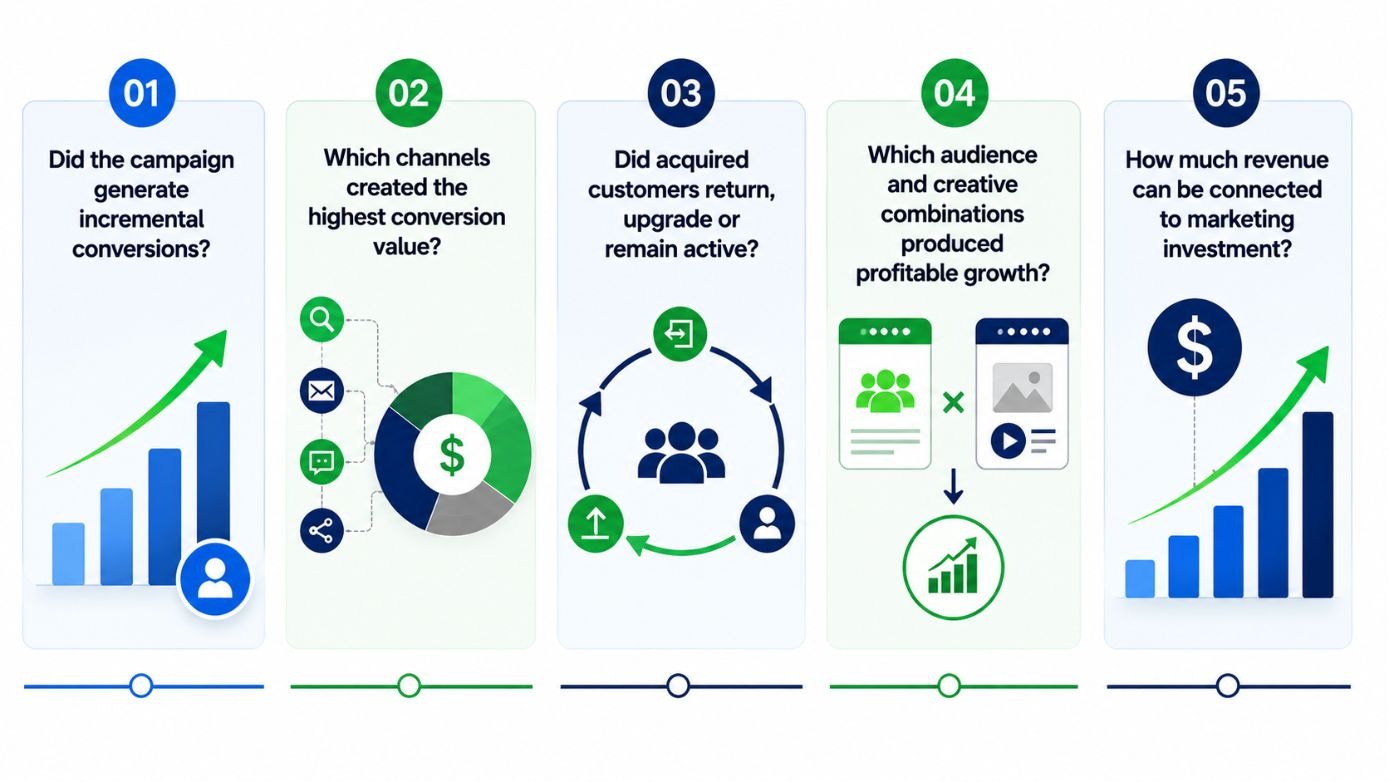
The new marketing measurement framework evaluates the value created by an activity, not simply the volume of activity it generated. Hence, switching to value or impact metrics is beneficial for these three major benefits:
McKinsey’s State of Marketing Europe 2026 Report highlights that marketing leaders are increasingly prioritizing smarter budget allocation and rigorous ROI tracking. In fact, 72% of CMOs plan to increase their budgets relative to sales in 2026 and also face growing pressure to better explain marketing’s ROI.
That is why value metrics in digital marketing matter. To see which channels truly perform, teams need to track:
This allows advertisers to redirect spend from high-visibility and low-impact activity towards campaigns, audiences, and creatives that generate profitable growth.
Engagement doesn’t tell whether customers purchased once, returned, upgraded, or remained profitable. That’s why 48% of marketers have shifted their focus from vanity metrics to KPIs tied to revenue and customer satisfaction.
Value metrics connect acquisition with AOV, retention, repeat purchases, and CLV. This helps you differentiate short-lived conversion volume from durable growth and hence optimize campaigns for customers who contribute greater value over time.
Privacy regulations are constantly evolving. On top of that, higher acquisition costs and weaker cross-site signals have left less room for wasted advertising spend. The infamous Google Cookiepocalypse did not fully eliminate third-party cookies from Chrome. But consent requirements, browser restrictions, and fragmented customer journeys still limit visibility.
Therefore, marketers should pivot to incrementality-based metrics to know which campaigns genuinely create business impact.
By now, you should have no doubt about choosing impact metrics, but if you still have doubts, here’s a clear tabular differentiation between vanity metrics and value metrics.
The difference between vanity metrics and actionable metrics is not the number itself, but whether it can guide a commercial decision.
Here are some of the ways for CMOs to adopt value metrics
Start with the business objective and work backward. Make sure to have a measurable outcome for every campaign, and then select supporting indicators for each funnel stage. This will help you measure progress towards commercial goals rather than reporting activity without context.
First-party data is the new marketing gold, and it should be strengthened by collecting through consented CRM, website, purchase, and customer-service data. Connect this information with campaign and sales outcomes, and it’ll reduce dependence on incomplete third-party signals and isolated platform reports.
The numbers speak for themselves. As per Forrester Consulting's 2024 study, using first-party customer behavioral data in marketing strategies positively affects:
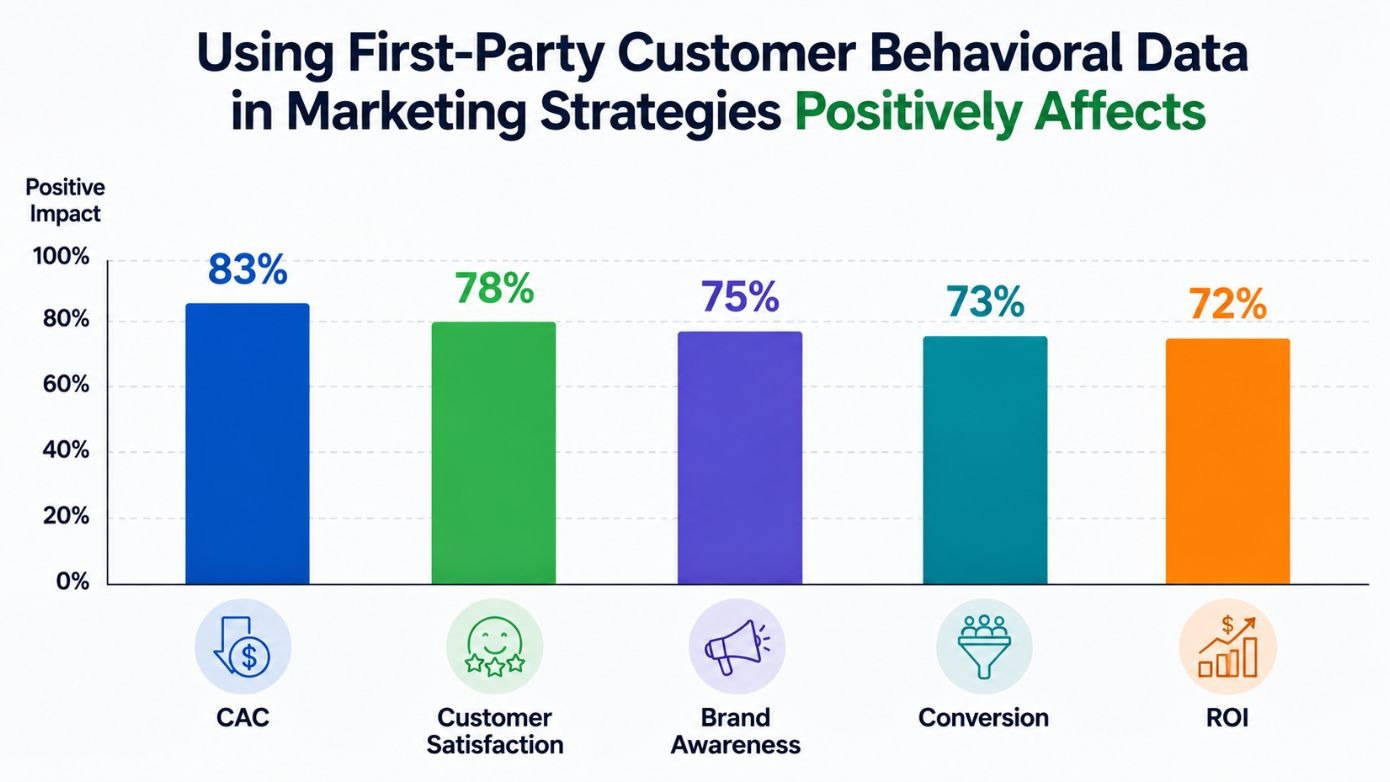
Advanced analytics tools help marketers connect campaign activity with conversions, revenue, and long-term customer value. Fine Media mentions that brands using advanced analytics tools can achieve up to a 20% increase in ROI compared with those relying on basic metrics. Incrementality testing and holdout groups further reveal which campaigns created genuine business impact.
Reach and engagement are useful early-stage signals when connected with qualified actions, conversions, revenue, retention, and CLV.
The value chain should be clear:
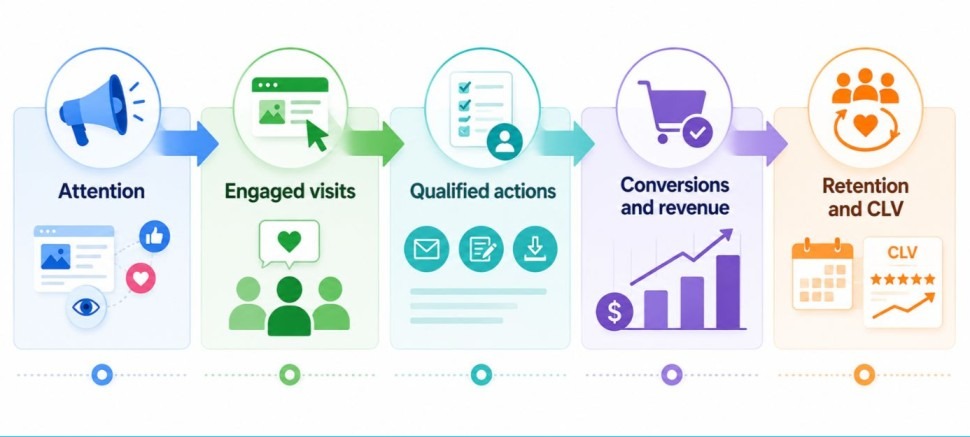
Every funnel stage should be evaluated according to its contribution to the next.
Jasper, a leading AI content automation platform for marketing, used a full-funnel strategy to support its rebrand in June 2025. The company divided campaign activity across awareness, consideration, and lead generation.
It used different creative formats and helped move marketing decision-makers from initial brand exposure towards demo requests. According to LinkedIn’s case study, the results of the campaign were:
Creative analysis is often the hidden reason behind rising CAC. It shows whether an ad is merely attracting attention or influencing profitable action. It identifies high-engagement creatives that fail to convert, as well as low-engagement ads that quietly drive purchase decisions.
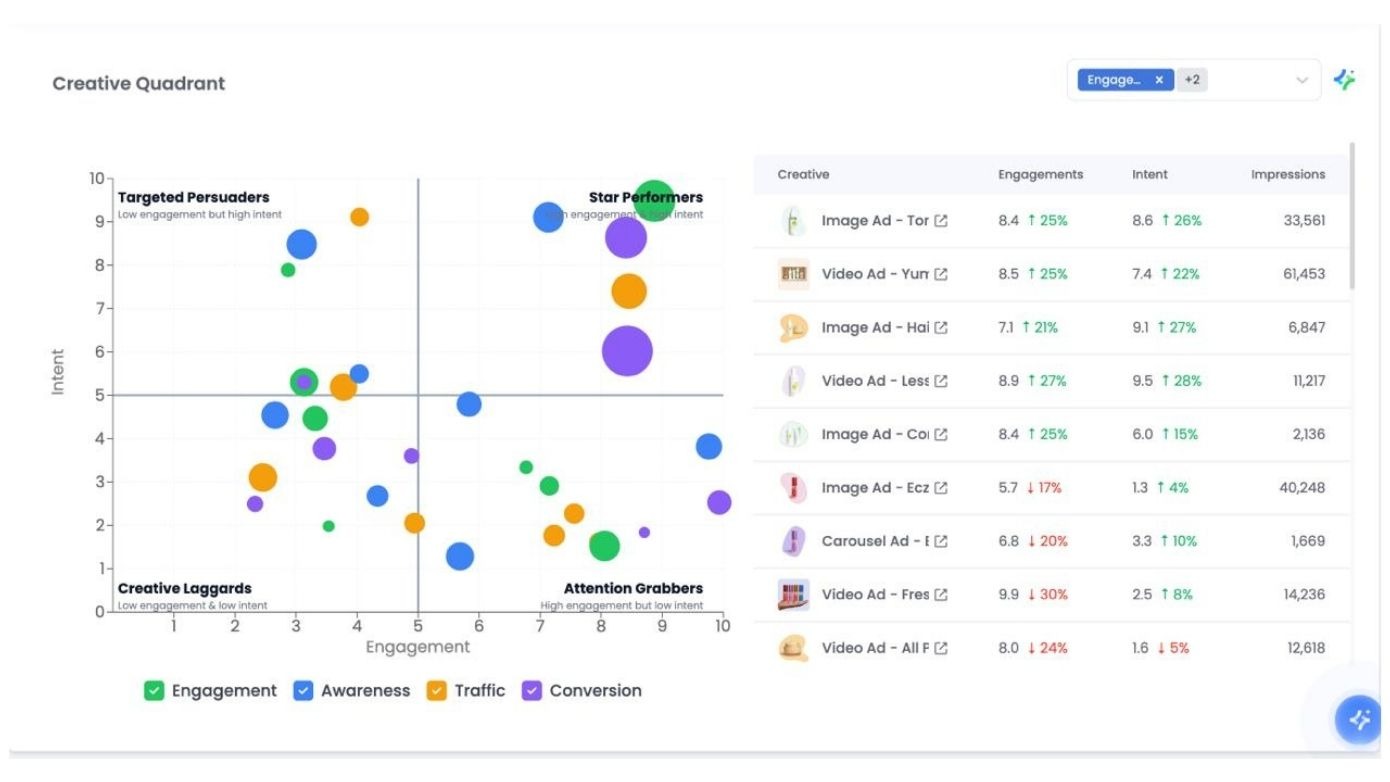
Creative analysis can be done by using CMGalaxy’s Creative Quadrant. It groups ads according to engagement and intent. Combined with CMGalaxy’s omni-channel marketing dashboard focused on ROI, conversions, and CLV, it helps advertisers move beyond vanity metrics and focus on value metrics in digital marketing.
There’s no doubt that vanity metrics still provide useful context, but they should not become the final verdict. Sustainable growth comes from measuring profitable acquisition, customer quality, and long-term value across the complete customer journey.
Stop chasing impressive numbers. Start measuring profitable growth with CMGalaxy. Redefine success metrics for sustainable growth.
1. What are value metrics in digital marketing?
Value metrics measure business outcomes such as revenue, ROI, conversion value, retention, customer acquisition cost, and customer lifetime value.
2. What is the difference between vanity metrics and actionable metrics?
Vanity metrics show visibility or engagement, while actionable metrics reveal whether marketing activity generated conversions, revenue, qualified leads, or long-term customer value.
3. Why is first-party data important for value-based measurement?
First-party data connects consented customer behavior, purchases, and CRM activity with campaign outcomes, reducing dependence on incomplete third-party tracking and platform attribution.
4. How does creative analysis help marketers move beyond vanity metrics?
Creative analysis compares engagement with intent, conversions, CAC, and ROAS, revealing which advertisements attract attention and which ones generate profitable customer actions.
5. How does CMGalaxy help measure value metrics?
CMGalaxy combines cross-platform campaign data, ROI, conversions, CLV, and creative performance in one dashboard, helping marketers identify profitable channels, audiences, and creatives.
Marketing technology content specialist with 4+ years of experience creating research-driven content for the EdTech and B2B SaaS space. Passionate about simplifying complex MarTech concepts through strategic storytelling, audience-focused writing, and data-backed insights.


Copyright © 2025 CMGalaxy | All Rights Reserved.


