.png)
.svg)



.jpeg)


.jpg)
Features
August 24, 2026
Ideal Customer Profile Bucketing: Do You Really Know Your Audience?


.jpeg)

27 Jul 26
Marketing moves fast, and brands are expected to be active across:
Every campaign has more moving parts, more customer touchpoints, and more data to track.
That is exciting, but it also creates a serious challenge for marketers.
Instead of spending most of their time on strategy, creativity, customer understanding, and growth planning, many marketers are stuck doing repetitive operational work. They
This is the marketer’s time trap.
Modern marketers have access to more tools, more channels, and more customer data, but that does not always mean they have more time. In fact, HubSpot found that most brands now use five to eight channels to connect with customers.
Why so many channels? Because the effort is worth it. According to 2026 marketing data, brands using 5–7 digital channels experience 3.2x higher customer engagement and 24% more revenue growth compared to those using only 1–2 channels.
The opportunity is clear. Multi-channel marketing works. But managing it manually can slow teams down.
This is where marketing automation helps.
Marketing automation is the use of technology to automate repetitive marketing tasks, workflows, and processes. It helps teams:
For example: When you leave something in a cart and immediately receive an automatic reminder, that is marketing automation.

The goal is not to replace marketers. The goal is to free them from repetitive work so they can focus on strategic growth.
Time is money, and it is one of the most valuable resources in marketing. A single campaign can involve:
Each channel creates data, and each touchpoint needs measurement.
Customers often need around eight touchpoints before they are ready to convert. That means marketers must manage multiple interactions before a customer makes a decision.
When all of this is handled manually, three problems appear:
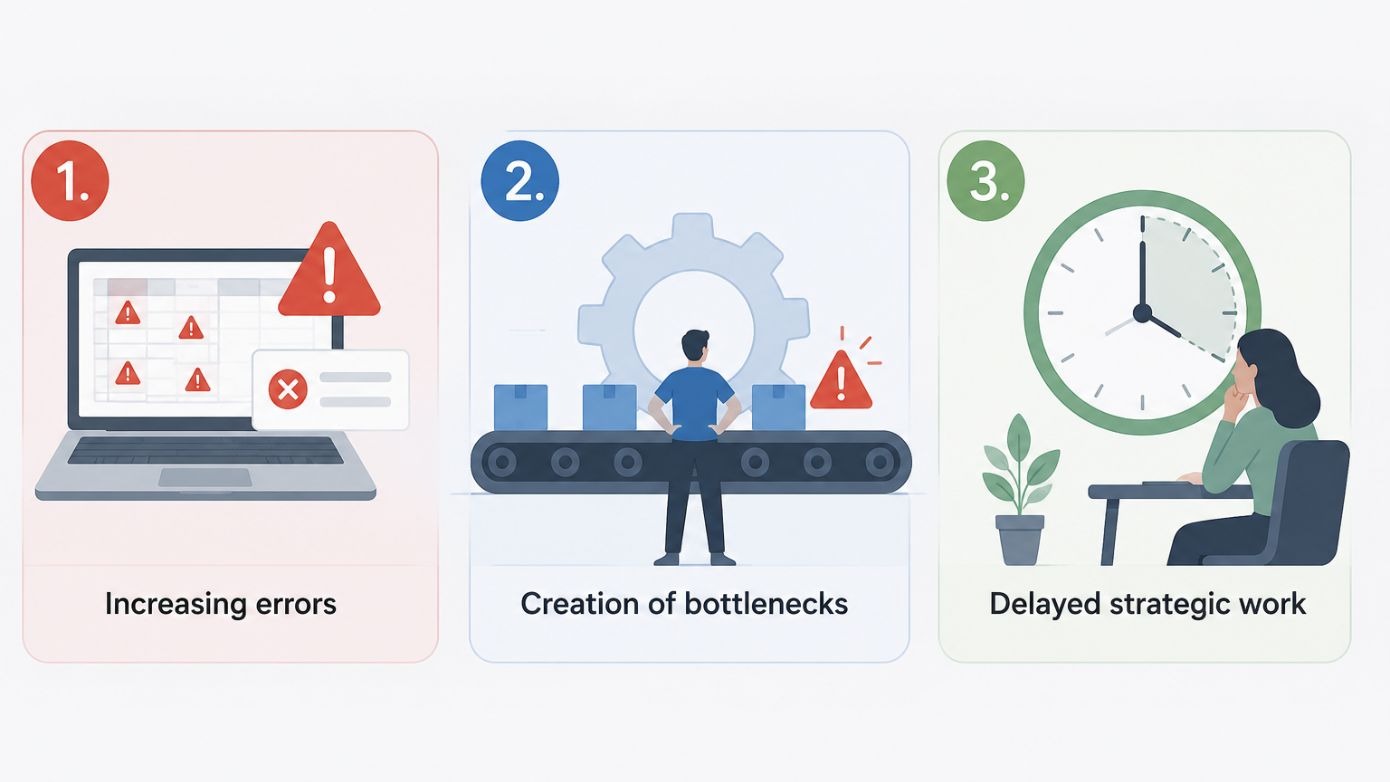
That is the real cost of the marketer’s time trap.
Here are some of the biggest marketing automation benefits and how they help you save time with marketing automation.
One of the biggest benefits is automated reporting. Manual reporting can take 6–12 hours per client per month. For an agency managing 15 clients, that can become 90–180 hours every month just on reporting. Automated reporting saves time by collecting data, updating dashboards, and generating reports without constant manual effort.
Marketing automation also improves lead qualification and follow-ups. Not every lead is ready to buy immediately. Automation can trigger personalized follow-ups based on user actions. Studies show that companies automating lead management can generate:
Automated marketing workflows also improve campaign efficiency. Tasks like scheduling emails, segmenting audiences, sending reminders, and tracking engagement can be handled faster and more consistently.
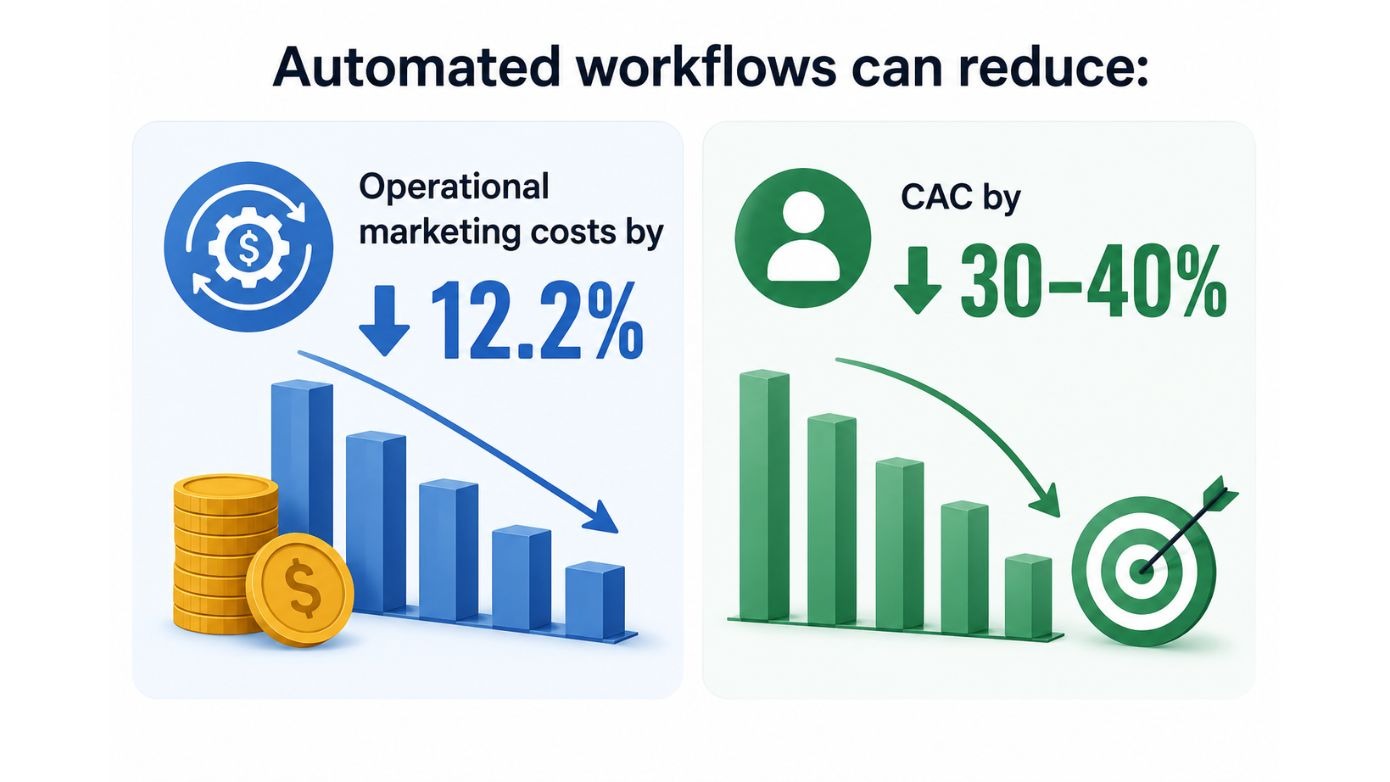
Automated workflows can reduce:
Another major benefit is consistency. Customers expect timely and relevant communication. Cincom found that 66% of customers switch brands due to poor communication. With automation, brands can send welcome emails, cart reminders, post-purchase follow-ups, loyalty messages, and re-engagement campaigns at the right time.
Marketing automation does not remove the need for strategy. It gives marketers more room to think strategically.
Once a brand starts using marketing automation, the next step is to make the overall marketing system more intelligent.
Automation helps you execute faster. But marketers still need to understand performance clearly. They need to know:
This is where an AI-enabled intelligence layer becomes useful.
Many teams use multiple tools for different parts of marketing. There may be one platform for ads, another for email, another for analytics, another for CRM, and another for reporting. While automation helps these systems run, marketers still need a clear view of performance across the full marketing journey.
That is where tools like CMGalaxy fit in.
Unlike traditional marketing automation tools, CMGalaxy is not a marketing automation tool. It does not replace your CRM, email platform, ad manager, or campaign automation software. Instead, CMGalaxy works as an AI-enabled reporting and intelligence layer that helps marketers with data analysis and smarter tech decisions.
It helps teams save time by bringing performance data into one place and making it easier to understand what is happening across channels. Instead of manually checking multiple dashboards, marketers can use a unified view to analyze campaign performance, customer journeys, and marketing outcomes.
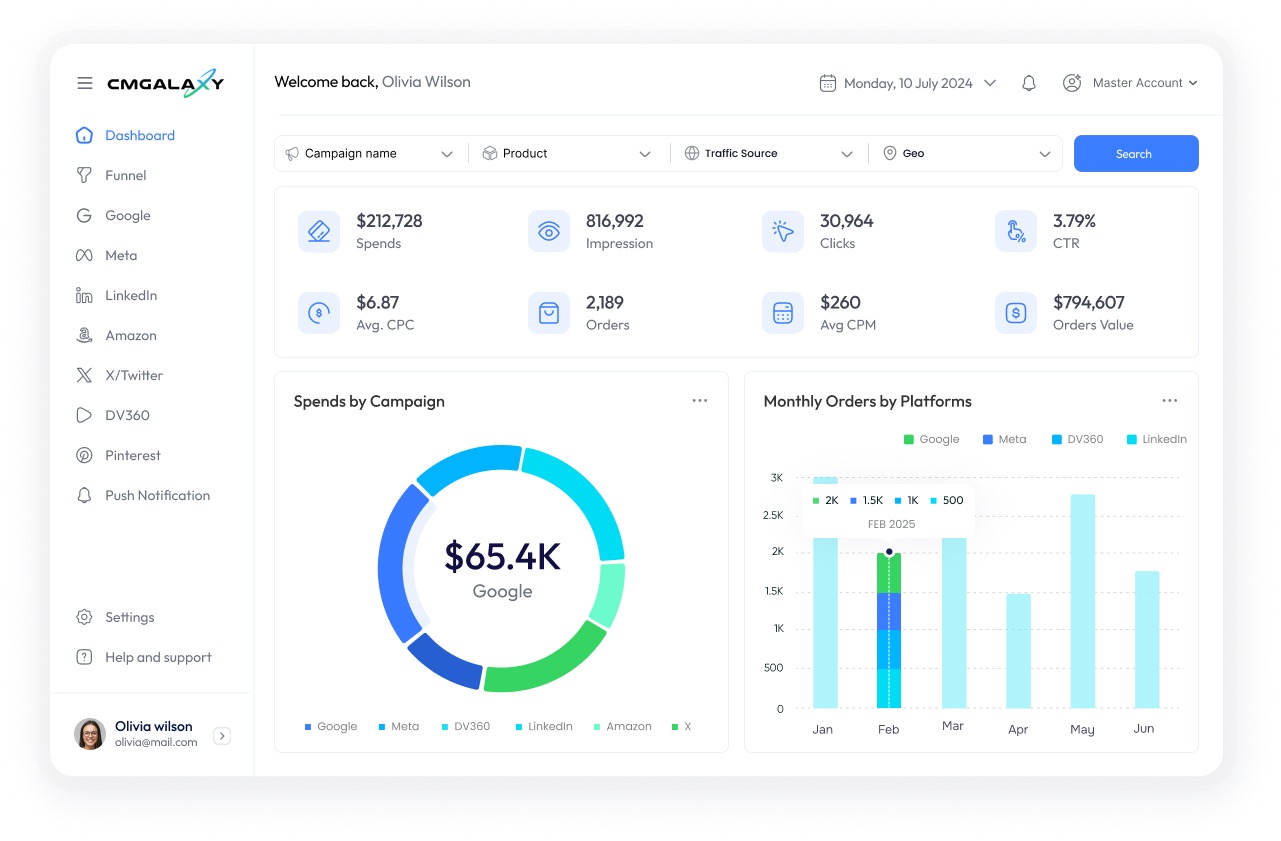
CMGalaxy works as an omni-channel marketing dashboard that supports reporting, campaign visibility, and insights. It helps marketers understand performance across 10+ platforms, view full-funnel attribution, identify trends, and make faster decisions.
This becomes especially valuable when teams are already using marketing automation. Automation handles repetitive workflows, while an intelligence layer helps marketers understand what those workflows are producing.
For example, marketing automation may send follow-up emails, trigger cart reminders, or schedule campaigns. CMGalaxy can help marketers analyze whether those efforts are contributing to better performance, stronger engagement, and improved campaign decisions.
It helps answer questions like:
This saves time because marketers do not have to spend hours manually connecting data from different sources. They can move faster from reporting to decision-making.
The future of marketing automation is not just about doing more tasks automatically. It is about combining automation with intelligence. The marketing automation market is projected to grow at a CAGR of 11.5% from 2025 to 2030, reaching $81.01 billion by 2030 from $47.02 billion in 2025. As more brands adopt automation, the advantage will come from how well they use data to guide strategy.
Marketing automation helps teams act faster. AI-enabled intelligence tools like CMGalaxy help teams think faster.
Together, they create a smarter marketing tech stack.
The marketer’s time trap is real. Marketing teams are expected to manage more channels, more campaigns, more reports, and more customer journeys. All this generates a huge amount of data.
Marketing automation helps solve this by:
But as marketing systems grow, teams also need better visibility into performance. That is why adding an AI-enabled intelligence layer can save even more time. Tools like CMGalaxy help marketers analyze data, understand performance, and make better decisions without replacing their existing marketing automation tools.
The aim is: let systems handle the grunt work so marketers can focus on growth.
Interested to know how your martech stack can benefit with AI? Get in touch with us or sign up for a 15 day free access to CMGalaxy.
Automation improves execution. Intelligence improves decision-making. Human strategy creates impact.
1. What is marketing automation?
Marketing automation is the use of technology to automate repetitive marketing tasks such as email follow-ups, campaign scheduling, lead nurturing, reporting, and customer communication.
2. What are the main marketing automation benefits?
The main benefits of marketing automation include saving time, reducing manual errors, improving campaign consistency, speeding up workflows, and giving marketers more time to focus on strategy.
3. How does marketing automation help save time?
Marketing automation saves time by handling repetitive tasks like automated reporting, cart reminders, email journeys, customer segmentation, lead follow-ups, and campaign tracking.
4. Is CMGalaxy a marketing automation tool?
No. CMGalaxy is not a traditional marketing automation tool. It works as an AI-enabled reporting and intelligence layer that helps marketers analyze data, understand campaign performance, and make smarter decisions.
5. How does CMGalaxy support marketing automation strategy?
CMGalaxy supports marketing automation strategy by bringing data from multiple platforms into one unified dashboard, helping marketers track full-funnel attribution, identify trends, analyze campaigns, and optimize budgets faster.
Marketing technology content specialist with 4+ years of experience creating research-driven content for the EdTech and B2B SaaS space. Passionate about simplifying complex MarTech concepts through strategic storytelling, audience-focused writing, and data-backed insights.


Copyright © 2025 CMGalaxy | All Rights Reserved.


