.png)
.svg)
.jpeg)
.jpeg)


.jpg)
Features
August 24, 2026
Ideal Customer Profile Bucketing: Do You Really Know Your Audience?




24 Aug 26
What if your best customer isn’t the one clicking every ad?
Most marketing teams know their audience, but very few know which customers actually drive growth, profit, and long-term revenue. That’s the difference between targeting people and understanding them. Ideal customer profile bucketing helps you identify which customers matter most and market accordingly.
Before you understand ICP segregation, it’s important to learn about audience segmentation since both terms are sometimes confused to be the same, but they denote different things.
Audience segmentation is the process of dividing a broad audience into smaller groups based on shared characteristics or behaviours so campaigns, creatives, and offers become more relevant and effective.
However, segmentation becomes truly valuable and effective when it is built around an ideal customer profile (ICP).
Ideal customer profile (ICP) bucketing identifies the customers who create the highest long-term value for your business. It groups customers into behavioural and value-based segments using real data such as:
In short: Target audience segmentation tells you who you are targeting, and ideal customer profile bucketing tells you which customers deserve different treatment.
For better clarity, here’s a tabular version showing differentiation between audience segmentation and ideal customer profile bucketing.
Strong ICP segregation provides several advantages across the marketing funnel:
Most importantly, it moves target audience segmentation from assumptions to measurable customer behaviour.
To achieve ICP buckets, you need connected customer data and visibility across the entire funnel. Advertisers can access ICP with the help of CMGalaxy. The platform helps you achieve ICP through five milestones within a month.
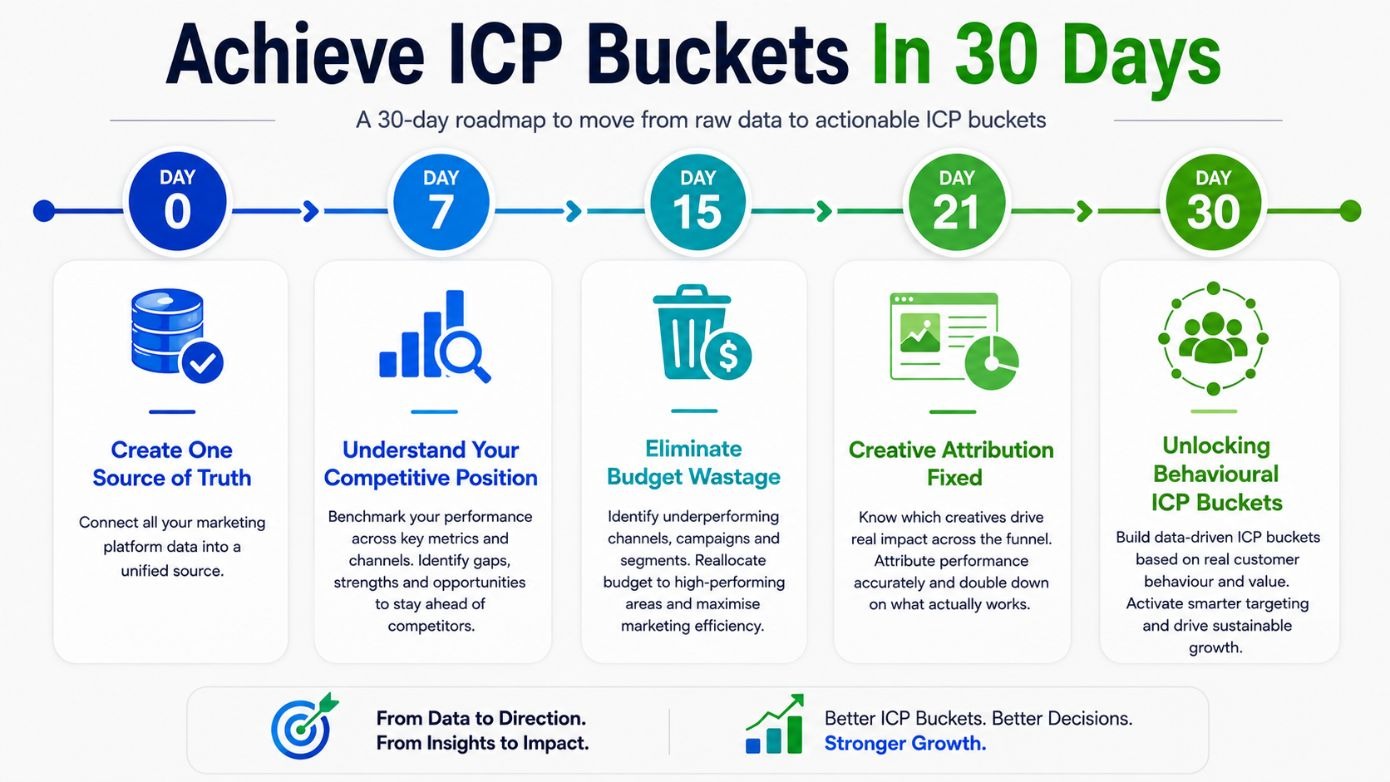
The first step includes bringing all your marketing and customer data into one place. HubSpot Marketing Report highlights that 52% of marketing teams manage campaigns across five to eight channels simultaneously, while 17% operate on more than eight channels to reach and engage their audiences.
CMGalaxy connects all your platforms and analytics tools so that every team works from the same numbers. This removes reporting confusion and gives you a reliable foundation for all future customer and campaign analysis.
Once your data is connected, the next step is to understand where you stand in the market. Businesses are reportedly aware of only about 25% of their competitors. This milestone helps CMOs compare website performance, paid advertising, organic visibility, and content to identify where competitors are gaining an advantage and where new opportunities exist.
By the 15th day, you’ll have a clean performance baseline. This analyzes campaigns, ad sets, and individual ads and identifies where the money is being wasted using spend vs. outcome logic. It removes underperforming elements and makes your data more accurate.
After 20 days, creative analysis helps you understand which creatives drive intent and conversions, not just clicks. It categorizes creatives into a quadrant based on two key signals: engagement and intent, and aligns them with funnel stages to show their actual contribution.
This makes it easier to know which creatives to scale, which to fix, and which to kill based on how they influence the funnel. Hence, creative performance is judged by business impact rather than vanity metrics.
After collecting enough behavioural data, you can begin ICP segmentation using cohort analysis across 3, 7, and 30-day ranges. Advertisers will obtain funnel drop-off visibility across every stage and user journey mapped from first touch to conversion.
CMGalaxy generates behavioural ICP buckets using real customer data and allows marketers to identify meaningful customer segments within the first 30 days of using the platform. Additionally, you get the first two milestones for free when you sign up.
ICP buckets show total segments, number of customers, orders, and contribution to revenue. There are ten types of ICP buckets.
These are the most valuable customers who purchase frequently and contribute highly to revenue. They are often a small share of total customers but an important share of total orders and revenue.
According to SAP, 68% of consumers say they are loyal to certain brands, showing that brand loyalty remains an important driver of repeat customer relationships. This bucket is ideal for loyalty programs, premium offers, referrals, and early product launches because these customers already show strong brand affinity.
These are customers who repeatedly respond to brand engagement and convert repeatedly over time.
For performance marketers, this segment helps identify the audiences and creatives that reliably generate purchases. Hence, it is valuable for scaling campaigns and building high-performing lookalike audiences.
High lifetime value customers may not purchase frequently, but they generate significant revenue across their relationship with the brand.
Do you know about the Pareto Principle? It’s commonly known as the 80-20 rule, which suggests that around 20% of customers can generate nearly 80% of a company’s revenue. This shows why identifying and understanding high-value customers is important.
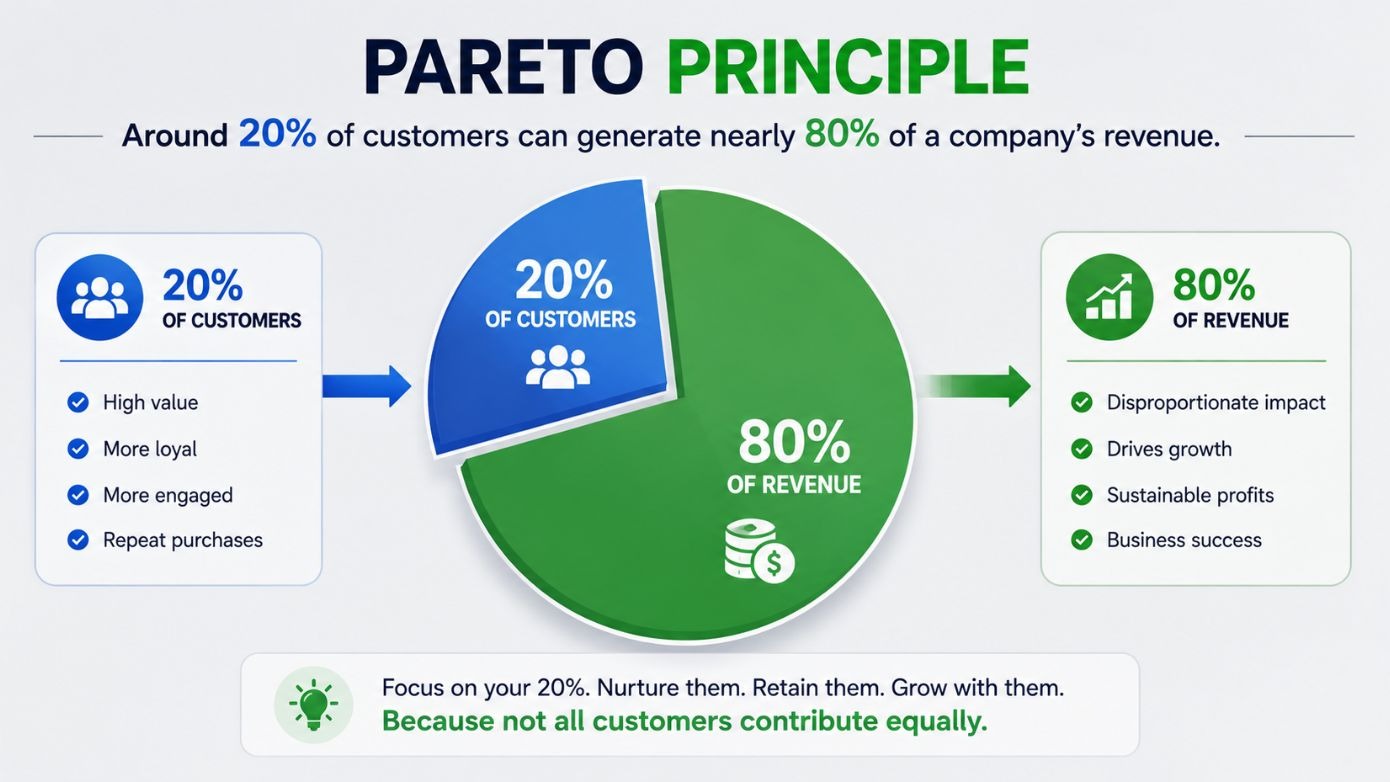
This bucket is important for CMOs because it shows where long-term profitability is coming from and where premium acquisition budgets can be justified.
These customers show strong signals that they could become future loyal or high-value customers if nurtured correctly.
They may have completed multiple purchases, engaged deeply with the brand, or showed above-average order values. This segment is often one of the highest-return opportunities for lifecycle marketing.
Customers who have made their first purchase but never returned. They represent a major retention opportunity.
Rather than spending heavily to acquire new users, you can improve profitability by converting one-time buyers into repeat customers through post-purchase campaigns, onboarding, and personalized recommendations. McKinsey states that 71% of buyers expect companies to deliver personalized interactions and 76% get annoyed when this doesn’t happen.
Dormant customers were previously active but have not engaged recently. Therefore, they are potential candidates for reactivation. Since they already know the brand, targeted re-engagement campaigns can encourage their return. Sprinklr mentions that getting a new customer costs five times more than retaining an existing one. This highlights the value of customer retention.
Churned Customers are previously engaged customers who have become inactive. They represent lost revenue potential unless they are successfully reactivated. Marketers must separate churned customers from dormant customers. This helps in building targeted win-back strategies based on how long customers have been disengaged and their historical value.
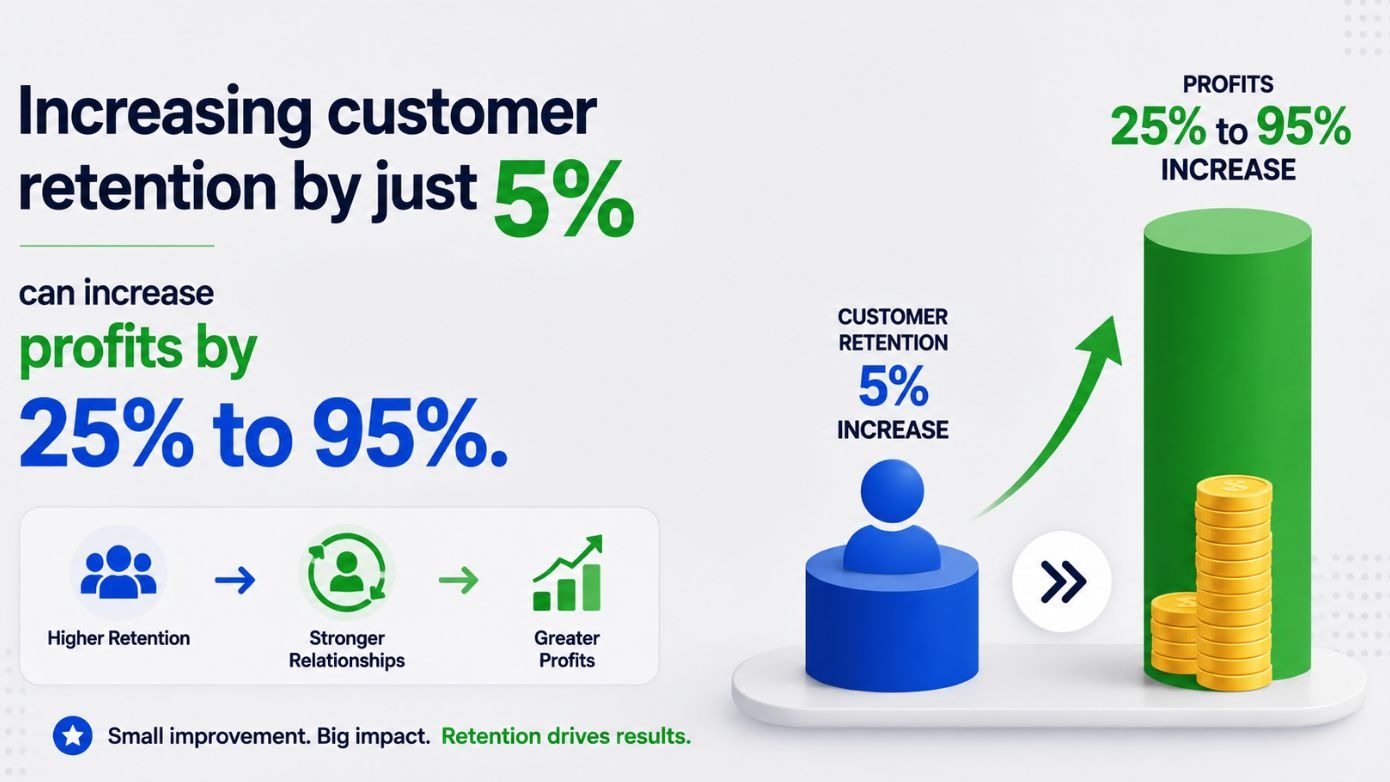
This distinction has an important business impact. Bain & Company found that increasing customer retention by just 5% can increase profits by 25% to 95%. Identifying churned customers therefore helps advertisers decide which valuable customers are worth re-engaging and where retention efforts could contribute to profitability.
Intent shoppers are customers who added products to their cart but left before beginning checkout. According to Statista, about 70% of online shopping carts are abandoned before checkout is complete. That means over two-thirds of potential online sales are slipping through the cracks.
This bucket is useful for cart recovery campaigns, urgency messaging, inventory reminders, and promotional triggers. Most of these can be easily done through marketing automation.
These are customers who reached the final stages of the purchase journey but exited before completing their transaction. They are often extremely close to conversion, so they are often among the highest-priority audiences for remarketing and personalised follow-up campaigns.
Advertisers can target this segment with checkout reminders, payment assistance, shipping incentives, trust signals, or personalized follow-up messaging to recover lost revenue. Studying Near Converters also shows where operational frictions might be occurring.
For example, payment failures, unexpected shipping costs, slow checkout experiences, or device-specific issues. This bucket helps you improve conversion rates across the entire bottom-of-funnel experience.
Miscellaneous Customers are users who do not match any predefined ICP bucket criteria but still contribute orders, engagement, and revenue. This segment often includes customers with irregular purchase patterns or unique behavioural combinations.
By analysing this bucket, CMOs can identify new or rising audience trends and find opportunities to refine future ICP segmentation and target audience segmentation strategies.
Identifying customer buckets is only the first step. The real value of ideal customer profile bucketing comes from the in-depth analysis available within each segment.
Every ICP bucket provides a detailed behavioural view of the audience. It allows you to understand:
Within each ICP bucket, you can manage the audience, view detailed performance analytics, and download the underlying customer data for further analysis or activation across advertising and CRM platforms.
Each bucket includes a comprehensive performance snapshot, including metrics such as:
This level of visibility will help you compare customer segments based on profitability, purchase behaviour, and long-term value rather than relying only on acquisition metrics.
Beyond revenue metrics, every ICP bucket includes product-level insights that help you understand what drives customer value within that segment.
You can view the top five products by quantity sold and the top five products by revenue generated. This makes it easier to know which products resonate most strongly with each audience group.
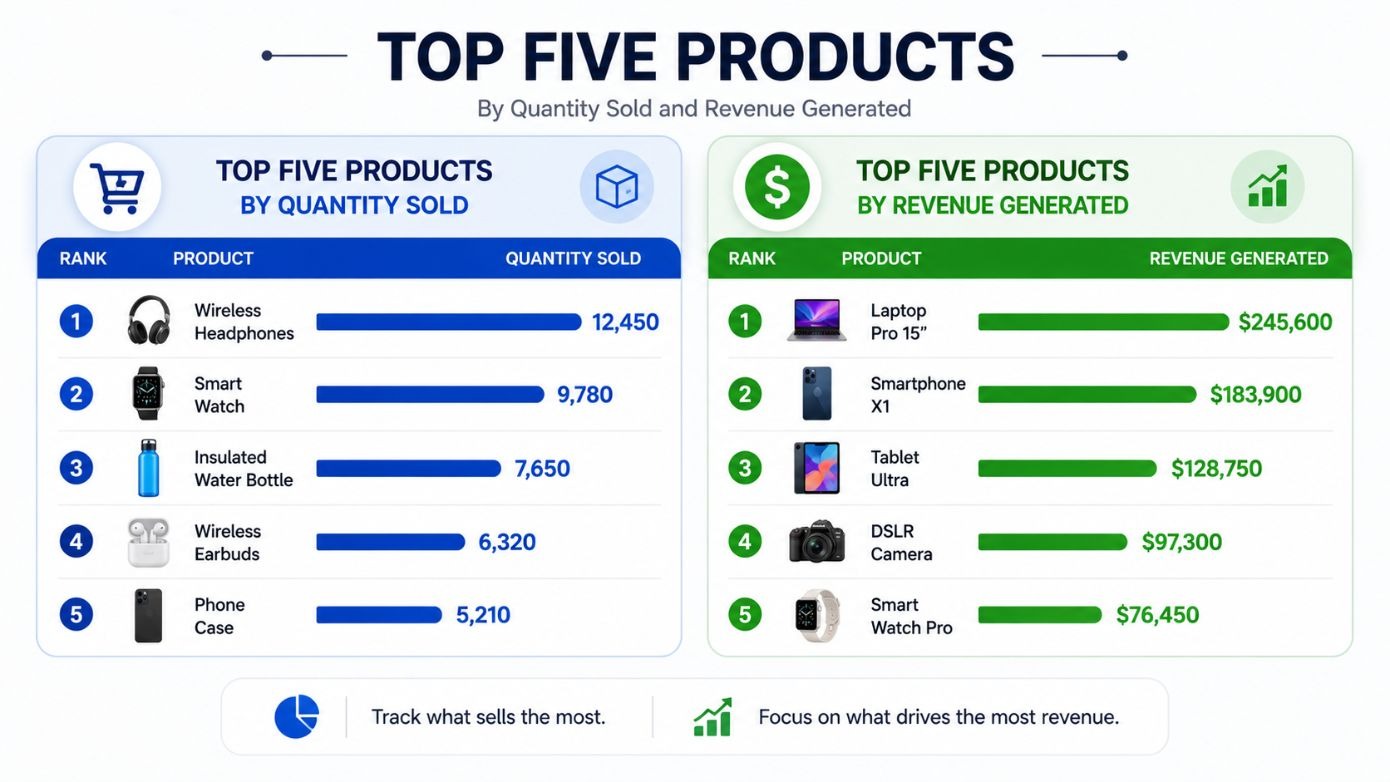
Additionally, the dashboard highlights the top campaigns driving that audience. It’ll help you connect campaign performance directly to customer quality and revenue contribution.
Each bucket allows you to see geographic coverage by customers and by orders. This will help regional marketing teams identify where high-value customers are concentrated and where expansion opportunities exist.
The buckets also offer detailed demographic and device-level segmentation, including:
These insights are useful for campaign targeting, creative optimisation, and media planning across different devices and operating environments.
One of the most valuable capabilities within ICP buckets is multi-touch attribution analysis. Instead of crediting a conversion to a single platform, ICP buckets reveal the most common cross-platform conversion journeys customers follow before purchasing.
Each attribution path shows total conversions, revenue generated, and average number of touches. It helps you understand how channels such as Meta, Google, direct traffic, email, and organic interactions work together throughout the customer journey.
For CMOs, this transforms ICP segmentation from a simple customer list into a strategic decision-making tool. By understanding these customer journeys, you gain the behavioural evidence needed to allocate budgets more effectively. You can also personalise campaigns and optimise performance across the entire marketing funnel.
The question is not whether you have customer data. The question is whether you are using that data to understand which customers create the most value for your business.
Ideal customer profile bucketing gives marketers a clearer view of customer behaviour across acquisition, conversion, retention, and lifetime value. It turns marketing audience segmentation into a decision-making framework that supports:
ICP segmentation based on real behavioral data instead of broad assumptions allows marketers to stop optimising for isolated metrics and start optimising for customer value.
And that is the difference between knowing your audience and truly knowing your customer.
1. What is ideal customer profile bucketing?
Ideal customer profile bucketing groups customers based on behavioural and value signals such as purchase frequency, revenue contribution, lifetime value, conversion behaviour, engagement, inactivity, demographics, device usage, and location.
2. What is the difference between ICP bucketing and audience segmentation?
Audience segmentation groups people for targeting based on shared characteristics, while ICP bucketing analyses existing customer behaviour and value to identify segments requiring different acquisition, retention, and engagement strategies.
3. What are the different types of ICP buckets?
ICP buckets can include Loyal Customers, Conversion Leaders, High LTV Customers, High Potential Customers, Dormant Customers, Churned Customers, One-Time Customers, Intent Shoppers, Near Converters, and other behavioural segments.
4. How does CMGalaxy help advertisers identify ICP buckets?
CMGalaxy analyses customer, campaign, revenue, device, demographic, geographic, and behavioural data to create ICP buckets, helping advertisers understand customer value, purchase behaviour, funnel movement, and cross-platform conversion journeys.
5. How long does it take to build an ICP with CMGalaxy?
ICP is CMGalaxy’s fourth milestone, unlocked by Day 30. By this stage, advertisers can analyse customer journeys, funnel drop-offs, cohorts, behavioural ICP buckets, and multi-touch attribution across their marketing ecosystem.
Marketing technology content specialist with 4+ years of experience creating research-driven content for the EdTech and B2B SaaS space. Passionate about simplifying complex MarTech concepts through strategic storytelling, audience-focused writing, and data-backed insights.


Copyright © 2025 CMGalaxy | All Rights Reserved.


